It’s Florida. It’s Hot…but I repeat myself.
It’s been said that the one thing Florida residents fear most is not alligators, snakes, or hurricanes, but their A/C unit is breaking down.
From our personal experience, the darned things always choose an inconvenient time, like the middle of a weekend night, to fail. The emergency trip charge from the A/C tech just adds to the overall exasperation that is caused by waking up in a bed wet with sweat. With this in mind, here is some information that you should probably keep in mind.
Living in Florida, we know the importance of a reliable central air conditioning (AC) unit. With the sweltering heat and high humidity, a well-functioning AC system is not just a luxury but a necessity. Proper AC unit maintenance ensures it runs efficiently, extends its lifespan, and helps avoid costly repairs. Here’s a comprehensive guide on maintaining your central air conditioning unit and its importance.
Why Maintain Your Central AC Unit?
- Energy Efficiency: A well-maintained AC unit runs more efficiently, reducing energy consumption and lowering electricity bills.
- Prolonged Lifespan: Regular maintenance helps prevent wear and tear, extending the life of your unit.
- Improved Air Quality: Clean filters and ducts ensure better indoor air quality, especially for those with allergies or respiratory issues.
- Cost Savings: Preventative maintenance can save you from expensive repairs or premature replacements.
- Consistent Comfort: Properly maintained units provide more consistent cooling, keeping your home comfortable year-round.
Steps to Maintain Your Central Air Conditioning Unit
- Regularly Change or Clean Filters
- Frequency: At least every 1-3 months.
- Why: Dirty filters restrict airflow, causing the unit to work harder and reduce efficiency.
- How: Locate the filter slot, remove the old filter, and replace it with a new one. Clean reusable filters according to the manufacturer’s instructions.
- Inspect and Clean the Coils
- Frequency: Annually.
- Why: Dirt and debris on the coils reduce the unit’s ability to absorb heat, leading to inefficient operation.
- How: Turn off the power to the unit, remove the outer casing, and gently clean the coils using a soft brush or a vacuum.
- Check the Condensate Drain
- Frequency: Every few months.
- Why: A clogged drain can cause water damage and affect indoor humidity.
- How: Locate the drain line and use a stiff wire to ensure it’s clear of obstructions.
- Clear Debris Around the Outdoor Unit
- Frequency: Monthly.
- Why: Leaves, dirt, and other debris can obstruct airflow to the outdoor unit.
- How: Regularly clear a 2-foot radius around the unit, removing plants, leaves, or other debris.
- Check Thermostat Settings
- Frequency: Seasonally.
- Why: Proper thermostat settings ensure the unit runs efficiently and maintains the desired indoor temperature.
- How: Verify that the thermostat is working correctly and consider upgrading to a programmable thermostat for better control.
- Schedule Professional Maintenance
- Frequency: Annually.
- Why: A technician can thoroughly inspect, identify potential issues, and provide necessary maintenance.
- How: Schedule an annual check-up with a licensed HVAC technician to ensure all components function correctly.
- Inspect Ductwork for Leaks
- Frequency: Annually.
- Why: Leaky ducts can cause significant energy loss and reduce cooling efficiency.
- How: Check for any visible leaks and seal them using duct tape or mastic sealant. Consider professional duct sealing for a comprehensive solution.
- Monitor Refrigerant Levels
- Frequency: Annually.
- Why: Low refrigerant levels can reduce cooling efficiency and damage the compressor.
- How: Have a professional check and recharge the refrigerant if necessary.
Common Problems with Central Air Systems that Require Maintenance
Central air conditioning systems can encounter a variety of issues that necessitate maintenance. Here’s a list of the most common problems in descending order of frequency:
- Dirty or Clogged Filters
- Frequency: Very common.
- Issue: Reduces airflow and efficiency, causing the system to work harder.
- Solution: Regularly replace or clean filters.
- Refrigerant Leaks
- Frequency: Common.
- Issue: Low refrigerant levels reduce cooling efficiency and can damage the compressor.
- Solution: Locate and repair leaks, then recharge the refrigerant.
- Thermostat Issues
- Frequency: Common.
- Issue: Faulty or incorrectly set thermostats can cause the system to run improperly.
- Solution: Calibrate or replace the thermostat.
- Electric Control Failure
- Frequency: Common.
- Issue: Worn-out or corroded electrical connections can cause system malfunctions.
- Solution: Inspect and tighten connections and replace damaged components.
- Drainage Problems
- Frequency: Fairly common.
- Issue: Clogged condensate drains can cause water damage and affect humidity levels.
- Solution: Clear the drain line and ensure proper drainage.
- Sensor Problems
- Frequency: Fairly common.
- Issue: Faulty sensors can lead to inconsistent temperatures and inefficient operation.
- Solution: Inspect and replace sensors as needed.
- Frozen Evaporator Coils
- Frequency: Fairly common.
- Issue: Reduced airflow and refrigerant issues can cause coils to freeze.
- Solution: Ensure proper airflow, check refrigerant levels, and clean coils.
- Fan Issues
- Frequency: Fairly common.
- Issue: Faulty fans can reduce airflow and cause the system to overheat.
- Solution: Inspect and repair or replace the fan motor and blades.
- Leaky Ductwork
- Frequency: Less common but significant.
- Issue: Leaks in ductwork reduce cooling efficiency and increase energy bills.
- Solution: Seal leaks and insulate ducts as needed.
- Compressor Issues
- Frequency: Less common but critical.
- Issue: Compressor failures can halt the cooling process and are often costly to repair.
- Solution: Regular maintenance must be done to prevent issues, and timely repairs or replacements are made when necessary.
- Capacitor or Contactor Problems
- Frequency: Less common.
- Issue: Faulty capacitors or contactors can prevent the system from starting or cause intermittent operation.
- Solution: Inspect and replace these components as needed.
Regular maintenance and prompt attention to these common problems can keep your central air conditioning system running smoothly and efficiently, especially in the demanding Florida climate.
Professional Maintenance is a MUST
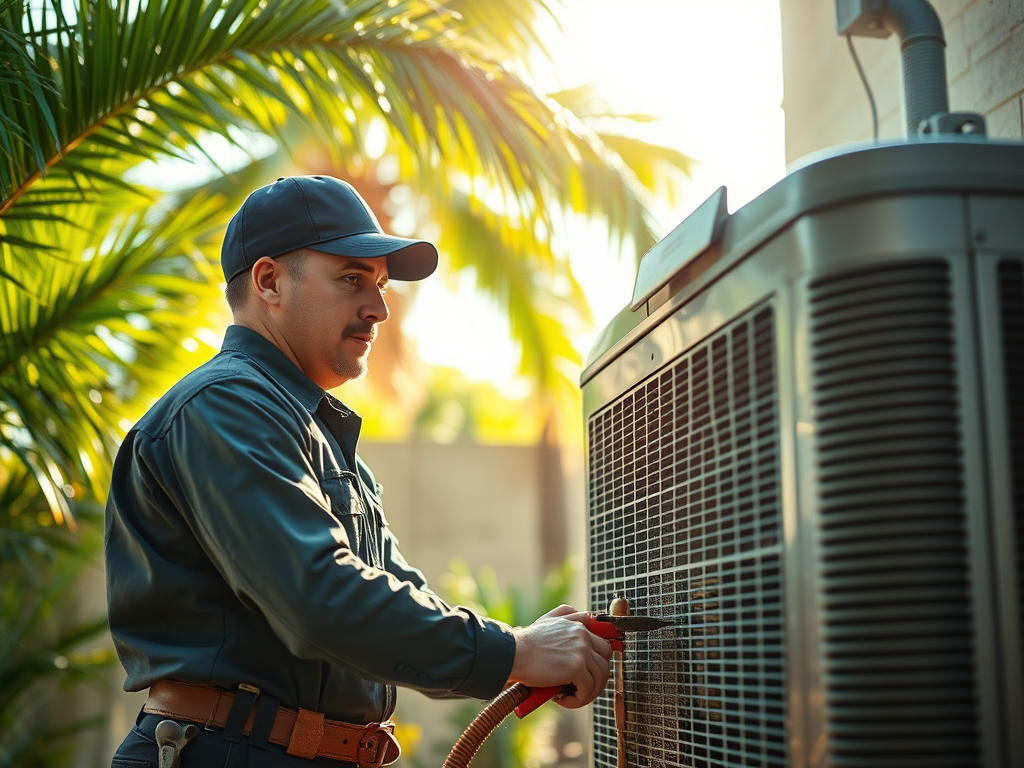
While you can perform many maintenance tasks yourself, scheduling professional maintenance is essential to ensure your central air conditioning unit operates at peak performance. A professional technician has the expertise and tools to perform a comprehensive inspection and tune-up, addressing potential issues before they become significant problems. Here are the essential tasks a professional will attend to during a maintenance visit:
- Inspect and Tighten Electrical Connections
- Loose or faulty connections can lead to unsafe operation and reduce the lifespan of major components.
- Lubricate Moving Parts
- Proper lubrication reduces friction in motors and other moving parts, ensuring smooth operation and reducing energy consumption.
- Check System Controls
- Verifying the correct operation of the system’s starting cycle, operation, and shutdown sequence ensures the unit functions properly and safely.
- Calibrate Thermostat
- Ensuring the thermostat is accurate and functioning correctly is crucial for maintaining a consistent indoor temperature and efficient operation.
- Measure and Adjust Refrigerant Levels
- Proper refrigerant levels are critical for the cooling efficiency of your AC unit. Professionals can identify leaks and recharge the refrigerant if needed.
- Inspect the Condenser and Evaporator Coils
- In addition to cleaning, professionals will inspect the coils for damage and ensure they are in good condition to facilitate heat transfer.
- Examine the Blower Components
- Proper airflow is essential for efficiency and comfort. Technicians will clean and adjust the blower components to ensure optimal airflow.
- Check for Ductwork Leaks and Blockages
- Professionals can thoroughly inspect your ductwork, identifying and sealing leaks to improve efficiency and indoor air quality.
- Test the System’s Safety Features
- Ensuring all safety controls are operational helps prevent dangerous malfunctions and prolongs the lifespan of your unit.
- Provide a Detailed Report
- After the maintenance visit, you’ll receive a report detailing the condition of your system, any repairs made, and recommendations for future maintenance.
Conclusion
Maintaining your central air conditioning unit in Florida ensures it runs efficiently, lasts longer, and keeps your home comfortable. By following these steps, you can enjoy the benefits of a well-maintained AC unit and avoid the inconvenience of unexpected breakdowns. Regular maintenance is a small investment that pays off in lower energy bills, fewer repairs, and a cooler, more comfortable home.
Leave a Reply