Buying a house is a significant milestone, and one of the pivotal steps in this journey is drafting a real estate contract. This document outlines the terms and conditions of the purchase, protecting the interests of both the Buyer and the seller. Here are the essential steps involved in crafting a solid real estate contract:
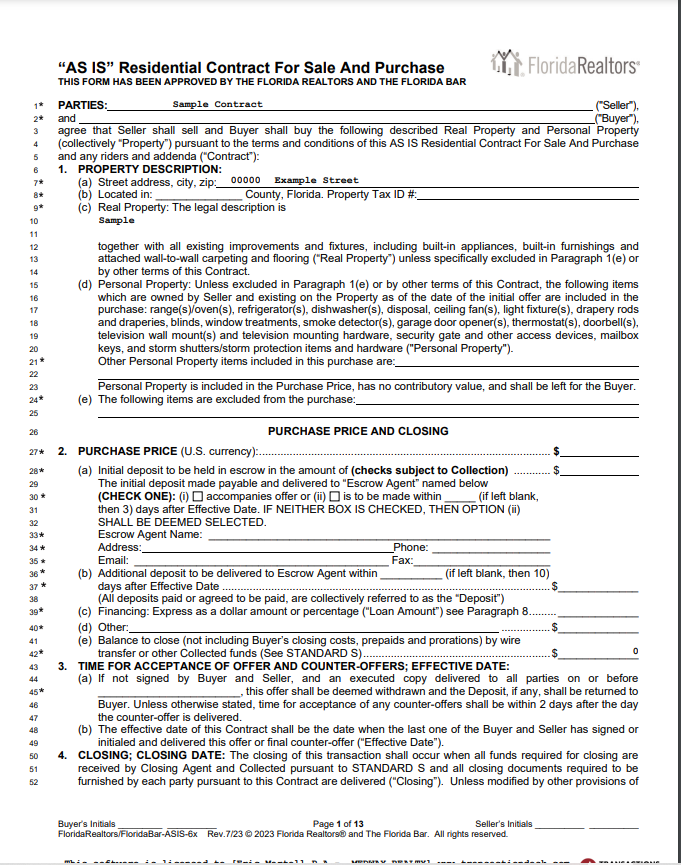
- Understanding Local Laws and Regulations: Real estate transactions are governed by laws and regulations that vary from one location to another. Familiarize yourself with the legal requirements and procedures specific to your area. It’s advisable to seek guidance from a local real estate attorney to ensure compliance with all relevant laws. In Florida, almost all real estate contracts are standardized forms used throughout the entire state. These forms are a joint product of the Florida BAR Association and the Florida Association of Realtors. Realtors cannot practice law and may not write contracts from scratch or make extensive modifications to the standard contracts. Their license does allow them to fill out the blanks in the standard contract and add specific provisions or words as directed by their customers.
- Identifying Parties and Property Details: Your agent will begin the contract by identifying the primary parties involved – both the Buyer (s) and the seller(s). Include their legal names and addresses. You will need to decide how you will hold title to the property since the title will be issued in the names of the Buyers as written in the contract. Next, the contract must include a detailed description of the property being purchased, including its address, legal description, and any additional features or fixtures included in the sale. This is critical to ensure that all the moveable parts of the property that the Buyer wants and assumes are being transferred will remain with the house.
- Stating the Purchase Price and Terms: Specify the agreed-upon purchase price for the property and the payment terms, including any escrowed funds, often referred to as earnest money. Outline the financing arrangements, such as whether the purchase is contingent upon obtaining a mortgage and the timeline for securing financing.
- Listing Contingencies: Contingencies are conditions that must be met for the contract to be valid. Typical contingencies include the Buyer’s ability to obtain financing, satisfactory home inspections, appraisal, and the sale of the Buyer’s current home. Clearly outline each contingency and the deadline for fulfillment.
- Disclosure of Property Condition: Sellers are typically required to disclose any known defects or issues with the property. Include a provision in the contract stating that the seller will provide a complete disclosure statement, including information about the property’s condition, history of repairs, and any environmental hazards.
- Setting the Closing Date and Possession: Specify the date of closing when the legal transfer of ownership will occur. Also, determine when the Buyer will take possession of the property. This could be on the closing date or at a later date agreed upon by both parties.
- Addressing Miscellaneous Terms: Include any additional terms or conditions relevant to the transaction, such as who will pay for closing costs, property taxes, and homeowner association fees. Also, outline the procedure for resolving disputes and any penalties for breaching the contract.
- Reviewing and Negotiating: Once the initial draft is prepared, review it carefully with your real estate agent and/or attorney. Based on negotiations between the Buyer and seller, your agent will make any necessary revisions, which must then be initialed or signed. Ensure that all parties fully understand and agree to the terms outlined in the contract. It is usually the case that the Sellers and Buyers will make counter-offers to terms proposed by the other party. This may only take a short time but can extend to multiple passes back and forth until negotiations are concluded. Negotiating is another part of the process that the expertise brought by an experienced real estate agent will expedite.
- Signing the Contract: Once the contract is finalized and all parties agree, it’s time to sign the final document. Signatures should be written exactly as the participants’ names are listed at the beginning of the contract. Once signed, the contract is binding on both parties and may only be breached under specific circumstances without opening one party or the other to potential legal action.
- Execution and Closing: After the contract is signed, it must be executed according to the terms it contains. The closing process involves completing all necessary paperwork, transferring funds, and officially transferring property ownership from the seller to the Buyer. Title insurance agencies or an attorney’s office often conduct closings in Florida.
Drafting a real estate contract requires careful attention to detail and a thorough understanding of the legal and financial implications. By following these steps and seeking professional guidance when needed, you can confidently navigate the process and successfully secure your dream home.
Most people purchase only a few homes throughout their lives, and the above steps can appear overwhelming to the non-professional. The assistance of an experienced and qualified real estate agent can significantly ease the transaction for both buyers and sellers. An experienced agent can help ensure that their client completes all steps in the transaction correctly and does not inadvertently make a mistake that will cause problems later on.
Leave a Reply